A staggering 99.99% of Americans fail to get the minimum recommended potassium intake (despite it being perhaps only half of our natural intake) and stay below the recommended sodium intake (even though it may be twice our natural intake).
Worldwide, physical inactivity accounts for more than 10 million years of healthy life lost, but what we eat accounts for nearly 20 times that. Unhealthy diets shave hundreds of millions of disability-free years off people’s lives every year.
What are the worst aspects of our diets? Four out of the five deadliest dietary traps involve not eating enough of certain foods—not eating enough whole grains, fruits, nuts and seeds, and not eating enough vegetables. But our most fatal flaw is too much salt—about 15 times deadlier than diets too high in soda, for example, just to help put things in perspective. You can see the breakdown below and at 1:12 in my video Fewer Than 1 in 5,000 Meet Sodium and Potassium Recommended Intakes.
“There remains no single more effective public health action related to nutrition than the reduction of sodium in the diet,” said a former commissioner of the U.S. Food and Drug Administration.
This is why national and international health organizations have called for warning labels on salt packets and salt shakers, with such messages as: “Too much sodium in the diet causes high blood pressure and increases risk of stomach cancer, stroke, heart disease, and kidney disease. Limit your use.”
Salt also increases inflammation. For example, sodium intake is linked to increased disease activity in multiple sclerosis (MS), an inflammatory autoimmune nerve condition, with about three to four times the exacerbation rate in those with medium or high sodium intakes compared to those getting less than a teaspoon of salt per day.
Just as you can see higher sodium levels in the tissues of those who suffer from lupus, another serious inflammatory autoimmune disease, you can correlate high sodium levels in the spinal cord of MS patients with the disease and decreased structural integrity.
Where is sodium found, though? In really crappy foods. So, it’s hard to know if increased salt intake is just a marker for a bad diet overall. We do know that salt and high blood pressure are cause-and-effect. How? More than a hundred randomized controlled trials have demonstrated that cutting down on added salt makes blood pressure fall, and the more salt is cut, the better. Part of the mechanism might actually be the damage salt may do to the microbiome, the friendly flora in the gut.
And no wonder. Our bodies evolved only to handle about 750 mg a day. The American Heart Association says we should stay under at least twice that amount, but we’re eating more than four times what’s natural. And it’s only getting worse, increasing over the last decade. Care to guess what percentage of Americans exceed the 1,500 mg upper limit recommendation? It turns out to be a whopping 98.8%. And that was more than a decade ago!
The vast majority of adults in the United States consume too much sodium and, at the same time, too little potassium, a mineral that lowers blood pressure. Less than 2% of U.S. adults consumed the recommended daily minimum intake of potassium. So, more than 98% of Americans eat potassium-deficient diets. This deficiency becomes even more striking when our current intake is compared with that of our ancestors, who consumed large amounts of dietary potassium. We evolved probably getting more than 10,000 mg a day. The recommendation is to get at least around half that, yet most of us don’t come anywhere close, as you can see below and at 3:51 in my video.
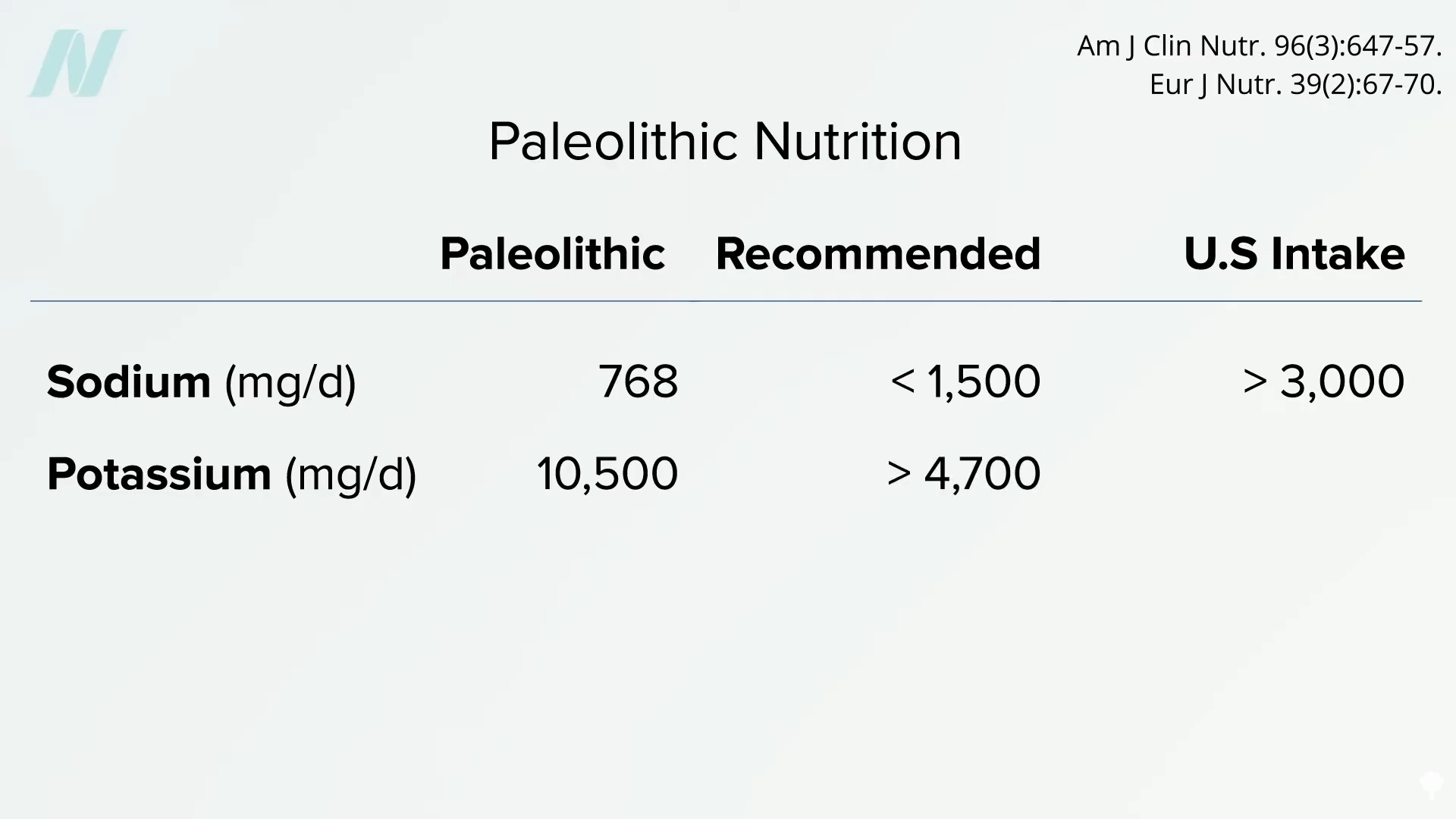
Put the two guidelines together, and sodium and potassium goals are currently met by fewer than 0.015% of people in the United States. That’s close to 99.99% noncompliance—only 1 in 6,000 Americans even hits the recommended guidelines.
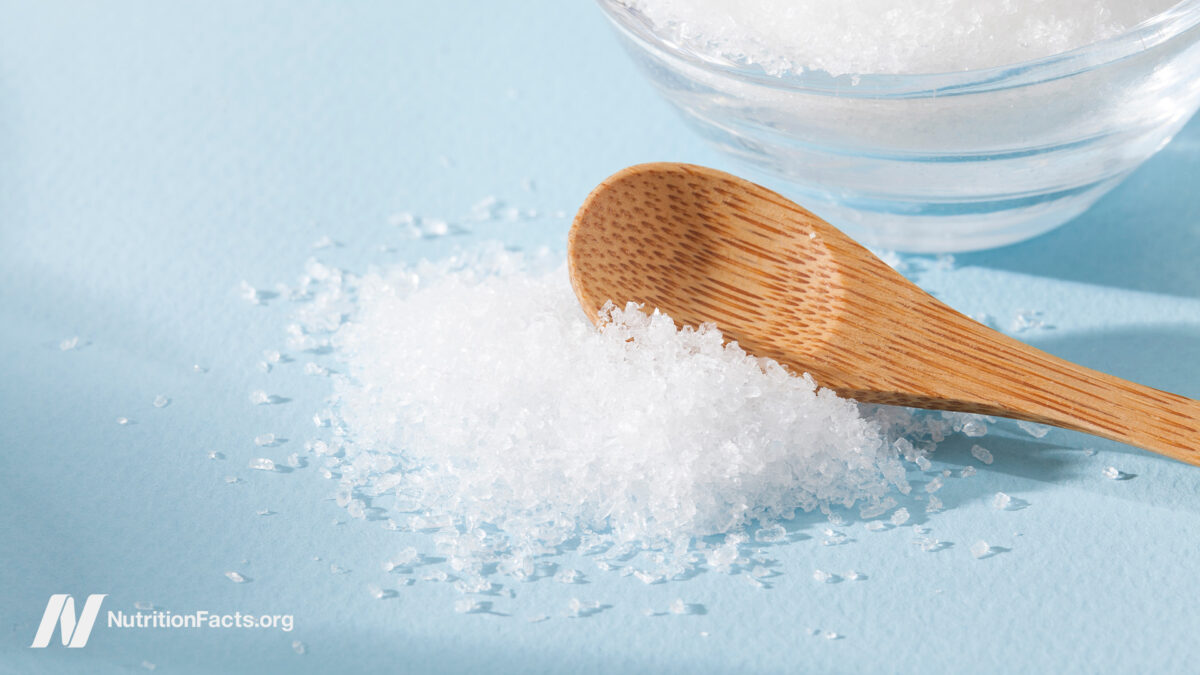
What about using potassium-based salt substitutes, like the ones shown below and at 4:15 in my video?
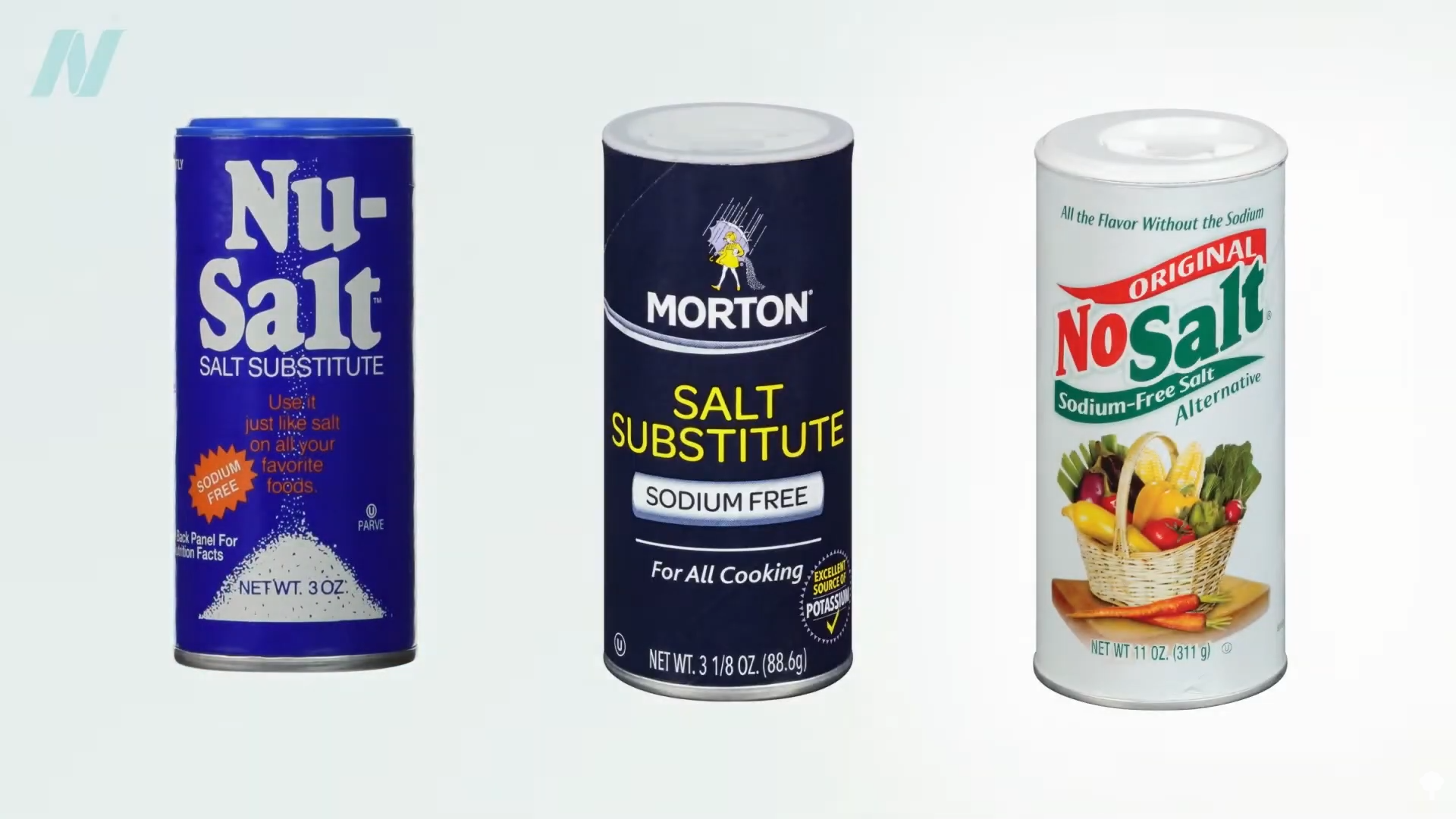
Instead of using sodium chloride, also known as salt, why not shake on some potassium chloride? Seems a little too good to be true. It has the same salty taste while reducing sodium and increasing potassium intake? Is there a catch? Are potassium-based salt substitutes safe? Are they effective? Stay tuned to find out.
Doctor’s Note
This is the first video in a three-part series on sodium, potassium, and a salt substitute. Stay tuned for Are Potassium Chloride Salt Substitutes Worth Trying? and Are Potassium Chloride Salt Substitutes Safe and Effective?.
What about those who claim salt isn’t a problem? Don’t believe them. See related posts below.